

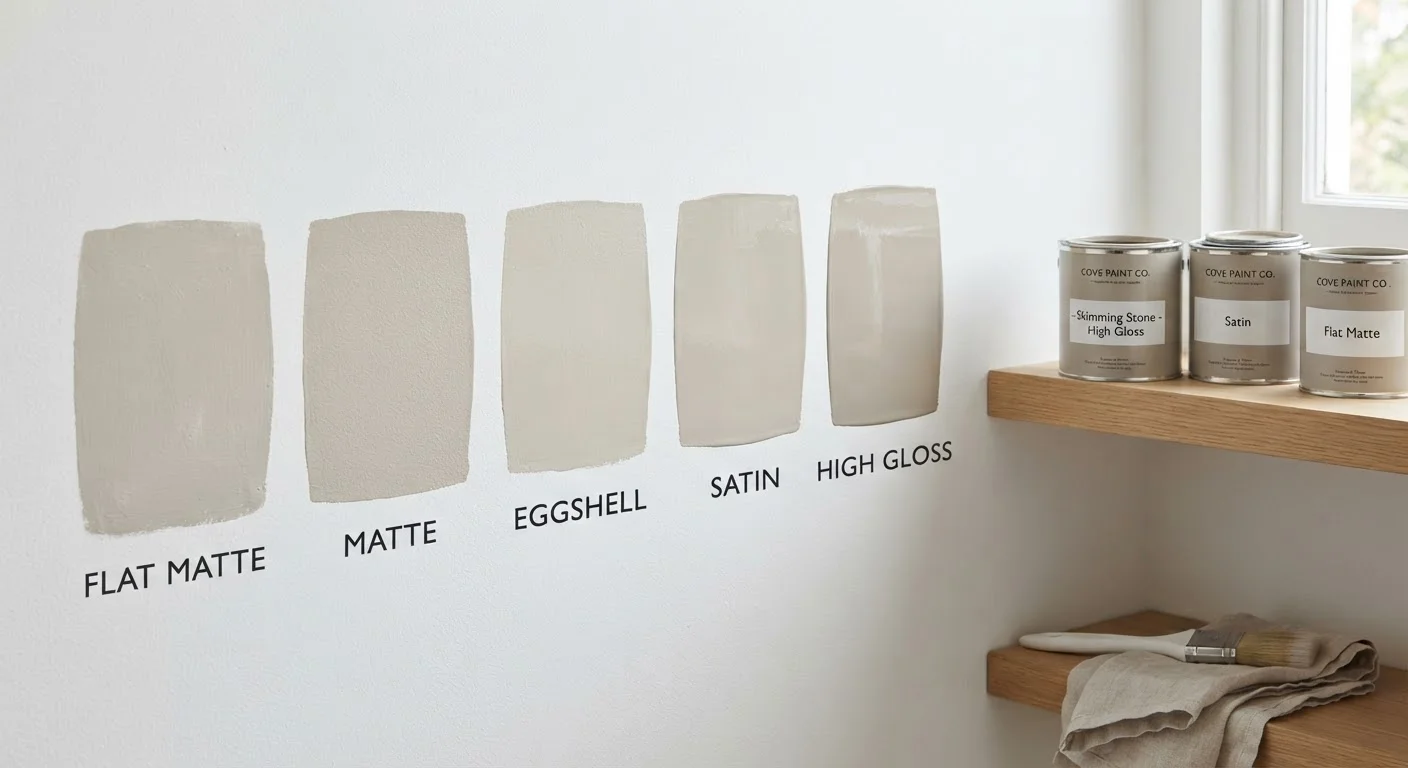
What Paint Finish Actually Means
When you buy paint, you're making two decisions at once: color and sheen. Sheen — also called finish — refers to how much light the dried paint surface reflects. It's not cosmetic window dressing; it directly affects durability, cleanability, and how well a surface hides imperfections. Understanding the four standard finishes lets you match the right paint to every room in your home with confidence.
| Sheen levels (low to high) | Matte → Eggshell → Satin → Semi-Gloss → Gloss |
| Best finish for hiding imperfections | Matte (flat) |
| Most versatile all-purpose finish | Eggshell |
| Most durable / moisture-resistant | Gloss and semi-gloss |
| Standard finish for interior trim | Semi-gloss (Industry-standard guidance from painting trade associations) |
| Recommended finish for ceilings | Flat / matte |
If you've ever repainted a room and wondered why the results looked uneven, the finish choice (or the prep work underneath) is often the culprit. See our guide to patchy painted walls for a deeper look at what goes wrong after application.
The Four Finishes, Explained
Matte (Flat) — The lowest sheen level. Matte absorbs light rather than reflecting it, which makes it excellent at hiding surface flaws like small dents, roller marks, or uneven drywall. It has a chalky, velvety look that many designers favor for living rooms, dining rooms, and adult bedrooms. The trade-off: it is the hardest finish to clean without leaving marks, so it's a poor choice for high-traffic or high-moisture areas.
Eggshell — Named for the subtle glow of an actual eggshell, this finish sits just above matte on the sheen scale. It offers a soft, low-luster appearance while being meaningfully more washable than flat paint. Eggshell strikes a balance that makes it one of the most versatile interior finishes — suitable for living areas, hallways, and bedrooms where light cleaning is occasionally needed.
Satin — A mid-range sheen with a smooth, slightly velvety appearance that resists moisture and scrubbing far better than eggshell. Satin is the go-to finish for kitchens, bathrooms, kids' rooms, and trim in moderate-use areas. It reflects enough light to feel slightly luminous without looking glossy. One caution: because satin has more reflectivity, it can reveal brush marks and application inconsistencies more readily than lower-sheen finishes.
Gloss (and Semi-Gloss) — The highest-sheen options, delivering a hard, shiny surface that is exceptionally durable and moisture-resistant. Semi-gloss is the standard choice for bathroom walls, kitchen cabinets, and interior trim such as baseboards, window frames, and doors. Full gloss is typically reserved for trim and accent work where maximum durability and a dramatic finish are desired. Both gloss levels highlight surface imperfections, so prep work must be thorough before application.
Sheen
The degree of light reflectivity in a dried paint surface. Higher sheen means more light is reflected, resulting in a shinier appearance.
Matte (Flat) finish
A paint finish with minimal reflectivity that absorbs light. It excels at hiding surface imperfections but is the least resistant to scrubbing and moisture.
Eggshell finish
A low-luster finish named for the subtle sheen of an eggshell. More washable than matte, it works well in living areas and moderate-use rooms.
Satin finish
A mid-sheen finish that offers good durability and moisture resistance. Commonly used in kitchens, bathrooms, and children's rooms.
Semi-gloss finish
A high-sheen finish that is hard, scrubbable, and moisture-resistant. The standard choice for interior trim, doors, and bathroom walls.
Surface prep
The process of cleaning, sanding, priming, and repairing a surface before applying paint. Adequate prep is especially critical with higher-sheen finishes that reveal imperfections.
Room-by-Room Recommendations
No single finish suits every space. Use this as a starting framework — your specific conditions (humidity levels, household foot traffic, the age of your walls) should guide the final call.
- Living room / dining room: Matte or eggshell. These spaces typically see moderate use, and lower sheens complement layered lighting beautifully.
- Bedrooms: Matte or eggshell. Adult bedrooms benefit from matte's ability to conceal ceiling or wall texture; eggshell works well if you anticipate occasional wiping.
- Hallways and stairwells: Eggshell or satin. High-contact areas need paint that holds up to repeated brushing and handprints.
- Kitchens: Satin or semi-gloss. Grease, steam, and frequent wiping demand a tougher surface.
- Bathrooms: Satin or semi-gloss. Moisture resistance is essential; flat paint in a bathroom risks mildew and peeling.
- Trim, doors, and baseboards: Semi-gloss or full gloss. These surfaces endure constant contact and benefit from the hardest, most scrubbable finish available.
- Ceilings: Flat or matte. Ceiling-specific flat paints minimize light reflection and hide the inevitable texture variations overhead.
Sheen and Light Work Together
The amount of natural and artificial light in a room affects how a finish looks in practice. A satin finish in a dimly lit hallway may appear closer to eggshell, while the same paint in a sun-drenched kitchen can look noticeably shiny. Always test a sample patch in the actual room and observe it at different times of day before committing to a full application.
The content on this site is for informational purposes only and is not a substitute for professional advice. Always consult a qualified professional for guidance specific to your situation.