

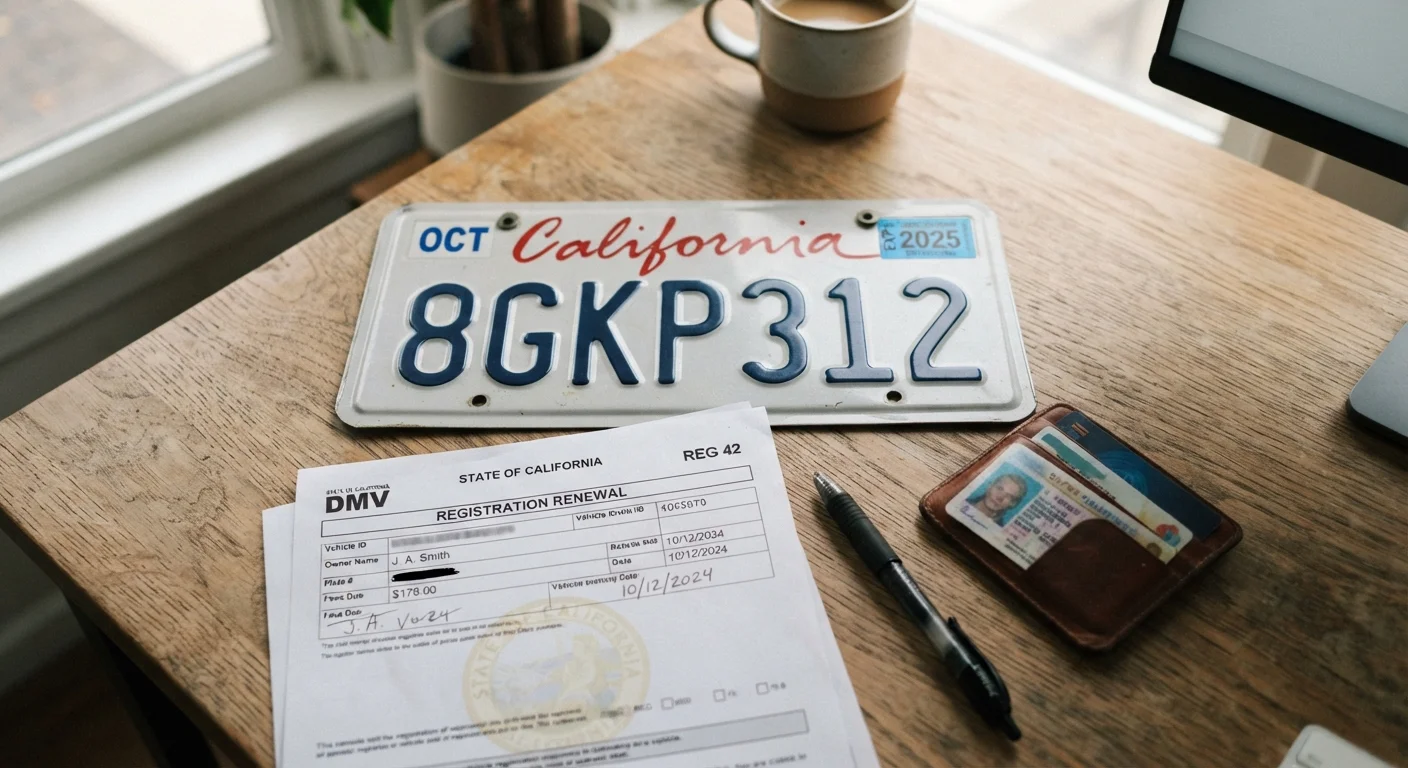
What Registration Actually Does — and Why It's Required
Every state in the US requires that motor vehicles operating on public roads be registered with a state agency — typically the Department of Motor Vehicles (DMV) or its equivalent. Registration serves multiple public functions: it links a vehicle to a specific owner, helps law enforcement identify vehicles, ensures that drivers carry minimum insurance, and in many jurisdictions, provides a mechanism for funding road infrastructure through fee collection.
When you complete registration, you receive a registration certificate to keep in the vehicle and a license plate or renewal sticker as visible proof of compliance. Registration is not the same as a vehicle title. The title establishes legal ownership; registration establishes the right to drive that vehicle on public roads. Both are necessary, and you generally cannot register a vehicle without first establishing a clear title.
This administrative process is part of the broader financial picture of car ownership. For a complete breakdown of what ownership really costs, see the true cost of owning a car in the US.
What You'll Typically Need to Register a Vehicle
While every state sets its own requirements, most registration processes share a common set of core documents:
- Certificate of title — proof that you legally own the vehicle
- Proof of auto insurance — meeting the state's minimum liability coverage requirements
- Valid government-issued ID — usually a driver's license
- Completed application form — available from the state DMV
- Payment of applicable fees — amounts vary considerably by state
Additional requirements can apply depending on the situation. Newly purchased vehicles may require a bill of sale or dealer documentation. Used vehicles often require an odometer disclosure. If the vehicle has a lien (meaning you financed it), you may need documentation showing the lender's interest — or a lien release if the loan is paid off.
Gather Documents Before Your DMV Visit
Incomplete paperwork is the most common reason registration appointments take longer than expected or have to be rescheduled. Before heading to a DMV office, confirm the full list of required documents on your state's official DMV website. Many states also allow you to start or complete the process entirely online, saving a trip altogether.
Some states also require a vehicle identification number (VIN) verification, particularly for out-of-state vehicles or vehicles with rebuilt or salvage titles. Check your state DMV's website for the complete list before visiting in person.
Why Fees and Rules Differ So Much Across States
Because vehicle registration is entirely state-administered, there is no single national standard for how fees are calculated, how long registrations last, or what inspections are required. This creates a landscape where a driver's annual registration cost in one state might be a fraction of what someone pays elsewhere for the same type of vehicle.
50
Separate state registration systems in the US
Each US state administers its own vehicle registration program with independent fee structures, renewal timelines, and inspection requirements.
Varies widely
Annual registration fee range across states
Annual registration fees can range from under $30 in some states to several hundred dollars in others, depending on how the state calculates its fee schedule.
30–90 days
Typical window to re-register after moving states
Most states give new residents between 30 and 90 days to transfer their vehicle registration after establishing residency, though the exact timeline varies by jurisdiction.
States use different formulas to set fees. Some base the cost on the vehicle's purchase price or current market value; others factor in weight, age, engine size, or horsepower. A handful of states charge a relatively flat fee regardless of vehicle characteristics. Local fees — county or municipal charges layered on top of the state base fee — can add further variation even within a single state.
Renewal cycles also differ. Most states require annual renewal, but some offer biennial (every two years) registration. Many states tie renewal to emissions testing or safety inspections, which must be passed before registration is issued or renewed. States without mandatory emissions programs have simpler renewal processes, but the trade-off is less air quality oversight.
For a granular look at how these variables combine to produce your specific registration bill, factors that affect what you'll pay to register a vehicle walks through each element in detail.
Registration Fees Often Fund Road Infrastructure
In many states, a portion of vehicle registration revenue is directed toward road maintenance, transportation projects, or public transit funding. This is part of why fee structures vary — states with higher infrastructure needs or different funding models may lean more heavily on registration fees as a revenue source.
Keeping Your Registration Current — and Your Records in Order
Most states send renewal notices by mail or email as your registration expiration approaches, but it's your legal responsibility to renew on time regardless of whether you receive a reminder. Many DMVs now offer online renewal, which is the most convenient option for straightforward renewals that don't require in-person inspection results.
Driving with an expired registration is a traffic violation in every state. Penalties range from modest fines to vehicle impoundment in cases of significantly lapsed registrations. Staying ahead of your renewal deadline is one of the simpler compliance tasks of vehicle ownership — and easy to overlook in a busy year.
Building registration renewal into a broader annual vehicle checklist helps ensure nothing slips. The annual vehicle ownership checklist covers registration alongside other recurring obligations like insurance reviews and emissions testing. For guidance on storing your registration certificate, title, and related documents where you can find them when it matters, see keeping vehicle records organised over the life of a car.
Frequently Asked Questions
Most states require a certificate of title (proving ownership), proof of current auto insurance, a valid government-issued ID, and a completed application form. Some states also require an odometer disclosure statement for used vehicles or a lien release if you've paid off a loan.
Most states issue registrations that are valid for one year, though some states offer two-year registration periods. The expiration date is usually printed on your registration card and displayed on the sticker affixed to your license plate.
Generally, no. Most states require you to register your vehicle in the state where you are a legal resident. If you move to a new state, you typically have 30 to 90 days to transfer your registration and update your driver's license.
Late registration typically results in penalty fees that increase the longer you wait. Driving with an expired registration can also result in a traffic citation. Most states allow a short grace period, but the specifics vary by jurisdiction.
No. Registration fees differ significantly across states and are calculated using various factors including the vehicle's age, weight, purchase price, or horsepower. Some states charge a flat fee while others use a graduated scale. See our article on <a href="/autos-driving/vehicle-ownership/factors-that-affect-what-youll-pay-to-register-a-vehicle">factors that affect registration costs</a> for a detailed breakdown.
No. A vehicle title is a legal document that establishes who owns the vehicle, while registration authorizes that vehicle to be operated on public roads. You need a title to register a car, but they serve different legal purposes.
The content on this site is for informational purposes only and is not a substitute for professional advice. Always consult a qualified professional for guidance specific to your situation.