

Why Medication Rules Vary So Much Between Countries
Each country controls what substances may cross its borders according to its own laws, international treaty obligations (such as the UN conventions on narcotic drugs), and domestic health policy. A medication that is an unremarkable prescription drug in the United States may be classified as a controlled narcotic, an unregistered substance, or an outright prohibited import in another jurisdiction. This disparity catches many travelers off guard, particularly with medications for pain management, anxiety, ADHD, or sleep disorders.
Even within a single trip, regulations can shift at each transit point. Layovers in countries with strict narcotics laws — even if you never leave the airport — can technically bring your baggage under their jurisdiction. Understanding the framework before you pack is the most effective way to avoid delays, confiscation, or legal complications abroad. Our safety abroad planning guide covers the broader preparation mindset that applies equally well to health logistics.
Do Not Rely Solely on Airline or Hotel Advice
Airlines and accommodation providers are not authoritative sources on drug import regulations. Customs and narcotics laws are governed by each country's own authorities, and rules can change without widespread announcement. Always consult the destination country's official embassy, consulate, or health ministry — and cross-reference with your own government's travel advisory pages.
What to Prepare Before You Travel
Preparation for traveling with medication begins well before your departure date — ideally at least a month ahead for complex itineraries involving controlled substances. Use the prerequisites and tool list below as your starting checklist, then work through each step.
What you will need
Physician's Travel Letter
A signed letter on official letterhead explaining your diagnosis, each medication, dosage, and medical necessity — a critical document at customs.
Original Pharmacy-Labeled Containers
Keeps medications clearly identified with your name, prescriber, and dosage, which customs officers typically require.
Medication List Summary Card
A wallet-sized or digital card listing all medications by generic name, dose, and prescriber — useful if containers are lost or damaged.
Insulated Travel Case or Cool Bag
Required for temperature-sensitive medications such as insulin to maintain safe storage conditions during transit.
Identify Every Medication You Plan to Carry
List all prescription and over-the-counter (OTC) medications, vitamins, and supplements you intend to bring. For each item, note the generic (international non-proprietary) name, brand name, dosage, and how it is administered. Brand names vary between countries, so customs officials and foreign pharmacists rely on generic names for identification.
Research Destination Regulations for Each Medication
Visit the official embassy or consulate website of every country on your itinerary and search their customs or health ministry pages for drug import rules. Also check your own government's travel advisory portal. Pay particular attention to:
- Whether the medication is legal, controlled, or prohibited at your destination
- Maximum quantities permitted for personal use (often expressed in days' supply)
- Whether advance import permits or notifications are required
See our guide to overlooked entry requirements for a broader picture of how documentation gaps create border complications.
Obtain a Physician's Travel Letter
Ask your prescribing doctor to provide a signed letter on official practice letterhead. The letter should include your full name, diagnosis or medical condition (in general terms), each medication by generic and brand name, the prescribed dosage and frequency, and a statement that the medication is medically necessary. Request the letter at least three to four weeks before departure to allow time for translation if needed.
Apply for Any Required Import Permits in Advance
Some countries require travelers to obtain prior authorization — sometimes called a personal import license or narcotics import permit — before bringing in controlled substances. This process typically involves submitting your prescription, physician's letter, and passport details to the destination country's relevant health authority. Processing times vary widely, so begin this step as early as possible, ideally six to eight weeks before travel.
Pack Medications Correctly for Transit
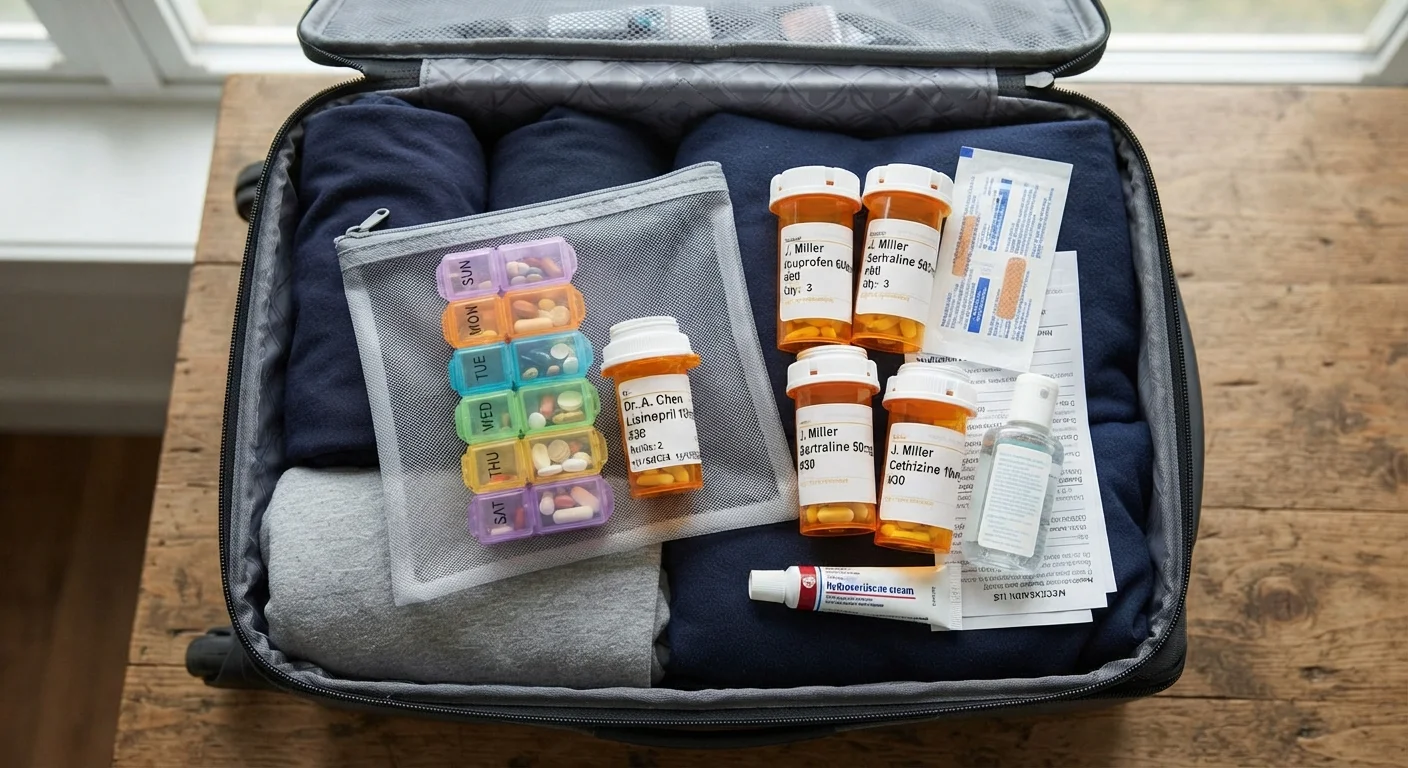
Keep all medications in their original, pharmacy-labeled containers. Place your physician's letter and copies of prescriptions in an accessible pouch in your carry-on bag. Liquids, gels, and aerosols in carry-on luggage remain subject to airport security volume limits unless you have declared them as medical items — check with your airline and departure airport for the current process.
[tip_callout]Declare Medications at Customs
When crossing a border, declare all medications on customs forms, particularly controlled substances, injectable medications, and large quantities. When in doubt, declare — customs officers generally respond more favorably to transparent disclosure than to items discovered during inspection. Have your physician's letter and any permits immediately accessible, not buried in checked luggage.
For a full pre-departure document review, see our pre-departure document checklist.
For a comprehensive pre-departure checklist covering documents, insurance, and health preparation, see the International Traveller's Essential Pre-Departure Checklist.
Controlled Substances Require Special Attention
Medications classified as controlled substances — including certain painkillers, sedatives, and ADHD treatments — are subject to strict import rules in many countries. Some destinations prohibit them outright, while others require advance authorization from the destination country's health ministry. Failing to obtain proper permits can result in confiscation, fines, or detention at the border. Always verify the specific legal status of your medication in every country on your itinerary well before departure.
This article provides general travel and informational guidance only and is not medical or legal advice. Regulations change frequently — always verify current requirements with official government and embassy sources before travelling. Consult your prescribing physician regarding your specific medication needs.
The content on this site is for informational purposes only and is not a substitute for professional advice. Always consult a qualified professional for guidance specific to your situation.