

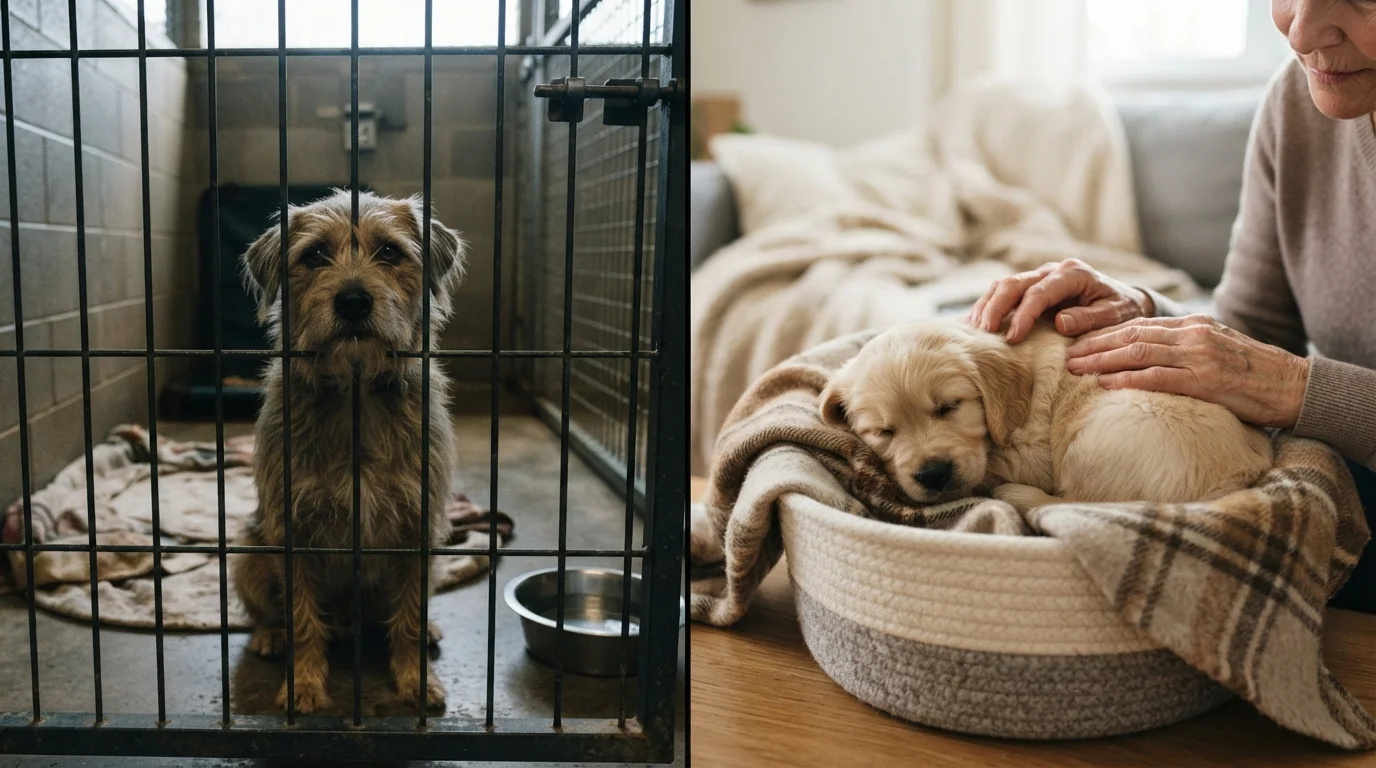
Option A
Shelter Adoption
The humane, second-chance pathway for animals in need.
Best for: Prospective owners open to a range of ages, breeds, and histories who want to provide a home to an animal already in the care system.
Option B
Buying From a Breeder
A deliberate, breed-specific route with greater predictability.
Best for: Households with specific lifestyle requirements — working dogs, allergy-sensitive environments, or strong breed-related needs — who seek known health and temperament histories.
What Each Pathway Actually Involves
Choosing how to bring a pet into your home is one of the most consequential decisions in the process — and it deserves more than a gut reaction. Both shelter adoption and purchasing from a responsible breeder involve a deliberate process, real costs, and meaningful trade-offs. Neither is inherently superior; each suits different circumstances.
Shelter adoption typically begins with visiting a local shelter or rescue organization, completing an application, and undergoing a screening process that may include a home visit. Animals available for adoption range from puppies and kittens to senior dogs and cats, as well as rabbits, guinea pigs, and other small animals. Many have been surrendered by previous owners, found as strays, or transferred from overcrowded facilities. Shelters usually perform behavioral assessments and provide basic veterinary care before placement.
Buying from a breeder — when done responsibly — involves researching breed clubs, requesting references, visiting the breeding facility in person, reviewing health testing documentation, and often joining a waiting list. Responsible breeders screen buyers just as carefully as buyers should screen them. They test breeding stock for hereditary conditions, socialize litters from birth, and remain a resource for the life of the animal. This is categorically different from a commercial breeding operation or puppy mill, which prioritizes volume over welfare.
Before committing to either path, it's worth working through your household's realistic capacity. See our practical framework for evaluating your lifestyle before bringing an animal home.
Comparing the Key Dimensions
Understanding where these two pathways differ — and where they overlap — helps clarify which makes sense for your situation.
| Criterion | Shelter Adoption | Buying From a Breeder |
|---|---|---|
| Upfront cost | Lower ($50–$500 typical adoption fee) | Higher ($500–$3,000+ depending on breed) |
| Age range available | All ages, including adults and seniors | Primarily puppies or kittens |
| Breed predictability | Variable; many mixed breeds | High; purebred with known lineage |
| Health history | Often limited or unknown | Documented across generations (responsible breeders) |
| Temperament information | Behavioral assessments often available | Socialization history known from birth |
| Spay/neuter included | Usually included or required | Rarely included; owner's responsibility |
| Wait time | Often immediate or short | Weeks to months on waitlist |
| Direct welfare impact | Frees shelter space; saves a life | Supports responsible breeding practices |
Cost is often the first consideration, but it rarely tells the full story. Adoption fees are lower upfront, yet ongoing care costs — food, veterinary visits, training, preventive medications — are broadly similar regardless of source. A breeder's higher purchase price may reflect extensive health testing, but it does not eliminate future veterinary expenses.
Health predictability is more nuanced than it appears. Purpose-bred animals from health-tested parents carry known genetic risk profiles, but this does not guarantee a healthy life. Conversely, mixed-breed animals may benefit from what geneticists call heterosis — a tendency toward greater genetic diversity — though this is not a guarantee either. For a deeper look at what responsible ownership entails after acquisition, see our breakdown of ethical, informed pet ownership.
Red Flags to Watch For in Both Worlds
Not all breeders are responsible, and not all shelter situations are straightforward. Knowing what to look for protects both you and the animal.
Puppy Mills: A Serious Welfare Concern
Large-scale commercial breeding operations — commonly called puppy mills — prioritize output over animal welfare and are distinct from responsible, small-scale breeders. Animals from mills are frequently sold through pet stores or online marketplaces with limited health documentation. If a puppy or kitten is available for immediate online purchase without a facility visit, treat this as a significant warning sign. The ASPCA and Humane Society of the United States have published guidance on identifying and avoiding these operations.
Breeder red flags include reluctance to allow facility visits, no documented health testing for breed-relevant genetic conditions, puppies available at all times without waiting periods, and pressure to purchase quickly. These patterns are common in commercial mills and irresponsible backyard operations. The American Kennel Club and breed-specific clubs maintain lists of affiliated breeders who meet published standards — a useful starting point, though independent verification remains important.
Shelter red flags are less common but worth noting: limited behavioral information about an animal, reluctance to share medical history, or minimal screening of adopters. A responsible shelter wants to ensure placements succeed. High return rates or pressure to adopt quickly without adequate assessment time can signal resource strain that may affect the quality of matching.
Understanding why pets are surrendered in the first place is illuminating. Our editorial on why pets end up in shelters highlights how better preparation — regardless of acquisition source — prevents the most common causes of rehoming.
Making a Decision Grounded in Reality
The most honest answer to "adopt or buy?" is: it depends on your household, your honesty about your own capacity, and the specific animal in front of you. An adult dog with a known temperament from a shelter may integrate more predictably than a puppy from any source. A breed chosen for documented low-allergen traits may be a medical necessity for some families.
6.3 million
Animals entering U.S. shelters annually
According to the ASPCA, approximately 6.3 million companion animals enter U.S. animal shelters each year, of which roughly 4.1 million are adopted.
~20%
Shelter animals that are purebred
Breed rescue organizations and shelters report that roughly 20–25% of dogs in shelters are purebred, countering the assumption that adoption limits breed-specific choice.
What matters most is that the decision is made deliberately, not impulsively. Both pathways can lead to long, healthy, mutually rewarding relationships — and both can go wrong if entered without adequate preparation. Whichever path you choose, commit to the full scope of care: training, preventive health, socialization, and the long-term financial responsibility involved. Our comprehensive guide to ethical, long-term pet care covers what that commitment looks like across a pet's entire life.
The content on this site is for informational purposes only and is not a substitute for professional advice. Always consult a qualified professional for guidance specific to your situation.