

Why Grooming Myths Persist
Grooming advice gets passed down through generations of pet owners, repeated in forums, and sometimes even echoed by well-meaning but misinformed sources. The result: a cluster of widely held beliefs that, on the surface, seem logical — but that veterinary and grooming professionals consistently warn against.
Understanding why these myths are wrong isn't just academic. Acting on faulty grooming information can cause skin irritation, coat damage, stress, and in some cases, long-term health problems for your pet. For deeper guidance on building healthy daily care routines, see everyday habits that support a long, healthy life for your pet.
Myth
Shaving a dog's thick coat in summer keeps them cooler and more comfortable.
Fact
Shaving a double-coated breed can actually impair their ability to regulate temperature and may permanently alter coat texture.
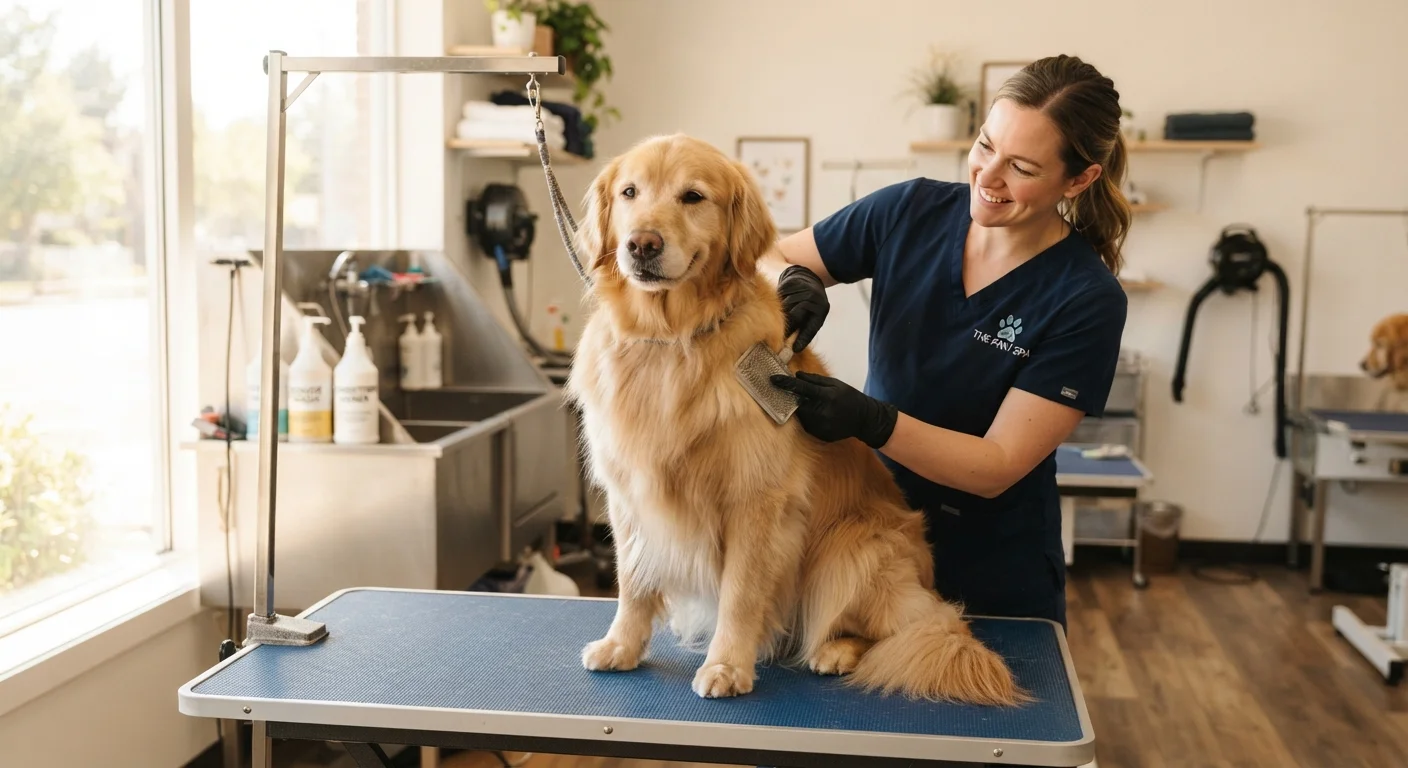
Dogs with double coats — such as Huskies, Golden Retrievers, and German Shepherds — have an undercoat and a topcoat that work together as insulation in both cold and warm weather. The undercoat traps cool air close to the skin while the topcoat deflects direct sunlight. Shaving removes this system entirely. In addition to disrupting thermoregulation, shaving can trigger a condition known as post-clipping alopecia, where the coat grows back unevenly, with texture changes that may persist. Regular brushing to remove dead undercoat is the evidence-backed approach to keeping double-coated dogs comfortable in warm months.
Myth
Cats need to be bathed regularly — at least once a month — to stay clean and healthy.
Fact
Healthy cats are highly effective self-groomers and typically do not require regular bathing.
A cat's tongue is equipped with microscopic, hook-shaped structures that distribute oils, remove loose fur, and dislodge debris throughout their coat. For most healthy cats, this is sufficient. Frequent bathing can strip natural oils from the skin, leading to dryness, irritation, and a dull coat. Baths may be appropriate in specific situations — such as when a cat has gotten into something toxic, has a flea infestation, or has a skin condition requiring medicated shampoo — but these are exceptions, not routine practice. Always consult your veterinarian before establishing a bathing regimen for your cat.
Myth
Human shampoo — especially gentle baby shampoo — is safe to use on pets in a pinch.
Fact
Human shampoos, including baby formulas, have a pH level incompatible with a dog's or cat's skin and can cause irritation.
Human skin has a pH of roughly 4.5–5.5 (mildly acidic), while dogs' skin sits at approximately 6.2–7.4 (closer to neutral). Shampoos are formulated to match their intended user's skin chemistry. Using a human product on a pet disrupts the protective acid mantle of their skin, stripping natural oils and leaving the skin vulnerable to bacterial and fungal overgrowth. Pet-specific shampoos are formulated to accommodate these differences. When in doubt about which shampoo is appropriate for your pet's coat or skin condition, your veterinarian or a certified groomer is the right resource.
Myth
Pets only need their nails trimmed when you can hear them clicking on hard floors.
Fact
By the time nails click audibly, they are often already overlong and putting strain on the paw and joint structure.
Overgrown nails can alter the way a pet distributes weight when walking, placing abnormal stress on the toes, paw pads, and joints over time. In severe cases, nails can curl and grow into the paw pad, causing pain and infection. The audible click is a useful reminder, but it should not be the only trigger for a trim. Most dogs benefit from nail maintenance every three to four weeks, though the ideal schedule varies based on how quickly nails grow and how much natural wear occurs from outdoor activity. Cats, particularly indoor cats, often need more frequent attention. If you are uncertain about technique, a veterinarian or groomer can demonstrate safe trimming and help you identify the quick — the blood vessel inside the nail.
Myth
Brushing a pet's teeth is optional if you give them dental chews.
Fact
Dental chews provide supplemental benefit but are not a substitute for mechanical plaque removal through brushing.
Periodontal disease is one of the most commonly diagnosed conditions in adult dogs and cats, and it begins with plaque accumulation along the gum line — an area that chews rarely reach effectively. Brushing with a pet-safe toothpaste physically disrupts plaque before it mineralizes into tartar. Dental chews, water additives, and certain diets may reduce plaque to varying degrees, but current veterinary dental guidelines consistently identify tooth brushing as the most effective at-home preventive measure. Introducing brushing gradually, using positive reinforcement, makes the process significantly less stressful for both owner and pet.
What Good Grooming Actually Looks Like
Responsible grooming is not about following a rigid, universal schedule — it is about understanding your specific pet's coat type, skin condition, lifestyle, and health status. A short-haired Beagle has very different grooming needs than a long-haired Maine Coon or a curly-coated Poodle mix.
Don't Guess With Skin or Coat Problems
If your pet is scratching excessively, losing patches of fur, or developing red or flaky skin, grooming changes alone are unlikely to resolve the underlying issue. These signs can indicate allergies, parasites, infections, or hormonal conditions that require a proper veterinary diagnosis. Changing shampoos or grooming frequency without professional guidance can delay effective treatment or make symptoms worse.
Beyond aesthetics, regular grooming sessions give you an opportunity to spot lumps, skin changes, parasites, or ear issues early. Vets frequently credit at-home grooming routines as a factor in catching health problems before they progress. For a broader look at how responsible ownership intersects with everyday care, explore the Responsible Ownership hub. And if behavioral signals during grooming have you puzzled, common misconceptions about animal behavior may help you interpret what your pet is communicating.
Grooming Is a Health Issue, Not Just Appearance
Neglected grooming — matted fur, overgrown nails, unaddressed ear buildup — can progress from discomfort to genuine medical problems. Severely matted coats can trap moisture against the skin, causing painful sores and infections. If your pet's grooming has been neglected for an extended period, consult a professional groomer and a veterinarian together to determine a safe plan for restoration rather than attempting aggressive correction at home.
The content on this site is for informational purposes only and is not a substitute for professional advice. Always consult a qualified professional for guidance specific to your situation.