

What Is Market Volatility, Really?
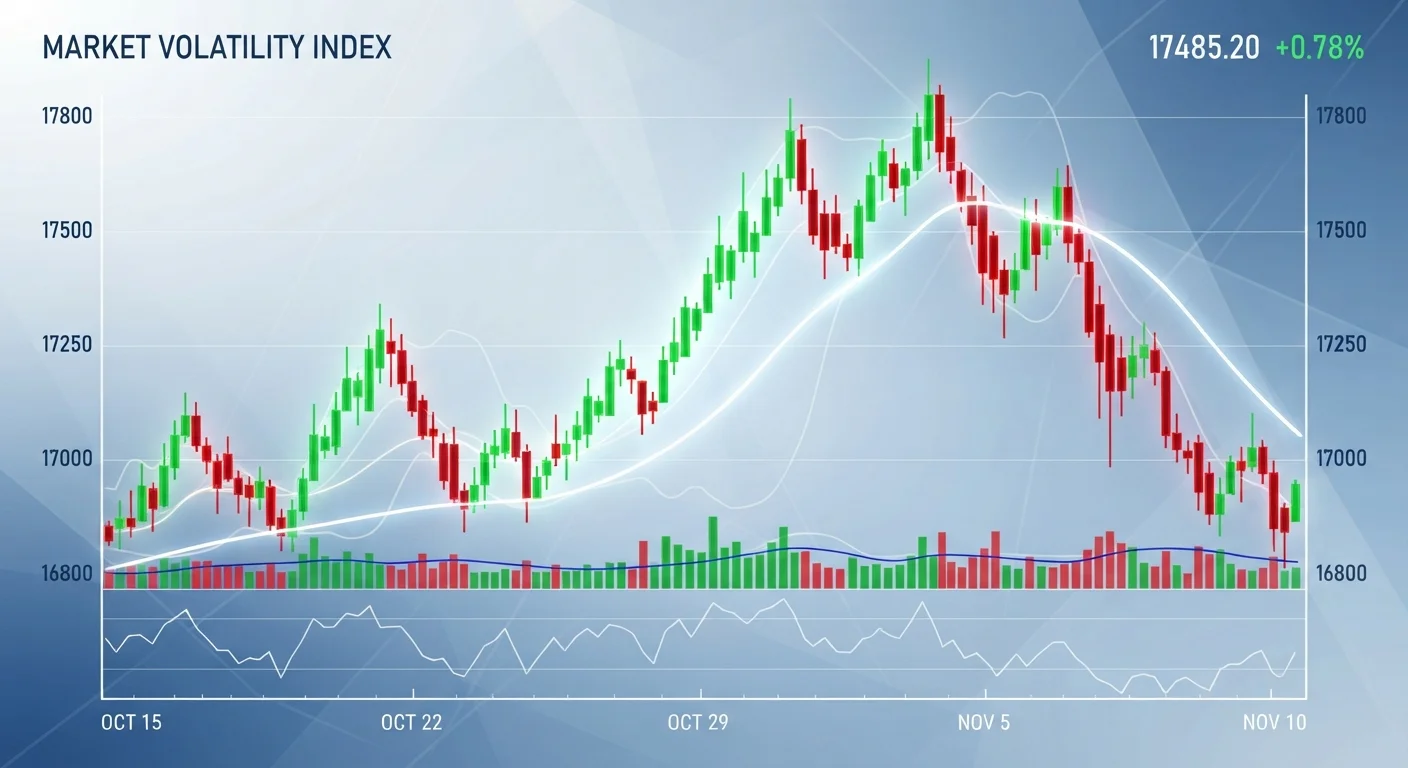
If you have ever glanced at a financial news headline and felt confused by talk of markets "plunging" or "surging," you are already encountering volatility. At its core, volatility simply describes how much investment prices move over a period of time — and in which direction.
Think of it like weather. Some days are calm and predictable; others bring sudden storms. Markets behave similarly. Prices rarely move in a straight line. They rise, dip, recover, and sometimes fall sharply — all as part of normal market functioning. Volatility becomes a problem mainly when investors are unprepared for it or misread its meaning.
It is worth noting that volatility is symmetric: it describes price swings in both directions. A market surging 3% in a day is just as volatile as one falling 3%. This distinction matters, because media coverage tends to emphasize the drops.
Volatility vs. Permanent Loss: An Important Distinction
A price decline due to volatility is not the same as a permanent loss. Volatile markets can recover, and prices that fall may rise again — though this is never guaranteed. A permanent loss occurs when an asset's value is genuinely destroyed (for example, a company goes bankrupt). Understanding this distinction helps investors avoid confusing temporary market noise with lasting damage to their holdings.
The Key Forces That Move Prices
No single factor controls market prices. Instead, dozens of forces interact constantly. Here are the most significant ones:
- Economic data: Reports on inflation, unemployment, consumer spending, and GDP growth shape expectations about corporate profits and interest rates — both of which directly affect asset prices.
- Central bank policy: When the Federal Reserve raises or lowers interest rates, it ripples through markets. Higher rates can make borrowing costlier for companies and make bonds more attractive relative to stocks, often pushing stock prices down.
- Corporate earnings: Publicly traded companies report earnings quarterly. If results beat expectations, prices often rise; if they disappoint, prices can fall sharply — even if the underlying business remains sound.
- Geopolitical events: Wars, elections, trade disputes, and international crises inject uncertainty into markets. Uncertainty typically drives volatility upward as investors reassess risk.
- Investor sentiment: Markets are moved by human emotion as much as hard data. Fear and optimism can cause prices to overshoot in either direction before correcting.
~1%
Average daily S&P 500 price swing
Historically, the S&P 500 has experienced daily moves of roughly 1% on average, illustrating how frequent price movement is even in normal market conditions.
20+
S&P 500 corrections since 1950
The U.S. stock market has experienced more than 20 corrections — declines of 10% or more — since 1950, demonstrating that significant pullbacks are a recurring, not exceptional, feature of markets.
85 days
Average days per year S&P 500 falls
Research suggests the S&P 500 historically declines on roughly one in three trading days, reinforcing that downward price movements are a regular part of market activity.
Understanding these forces is a foundation for financial literacy. For context on how different asset types respond to them, see our overview of stocks, bonds, and cash.
Why Volatility Is Normal — and Unavoidable
Many first-time investors assume that a well-functioning market should be stable. In reality, price discovery — the process by which markets determine what something is worth — requires constant movement. Prices shift as new information arrives and participants update their expectations.
“The stock market is a device for transferring money from the impatient to the patient.”
— Warren Buffett, Chairman and CEO of Berkshire Hathaway; widely regarded investor
Historical market data shows that short-term volatility has been a persistent feature of investing across decades, even as long-term trends have moved upward for broad market indices. Past performance does not guarantee future results, and individual investment outcomes vary — but the pattern underscores why short-term price swings and long-term investment goals are often separate concerns.
This is also why the relationship between risk and return is so central to investing education: accepting some degree of volatility is typically part of pursuing returns above what a savings account might offer.
How Investors Approach Volatile Markets
Volatility cannot be eliminated, but its impact on a portfolio can be managed through thoughtful strategy. One of the most widely cited approaches is diversification — spreading investments across different asset types, industries, and geographies so that a sharp decline in one area does not devastate the whole. Our article on diversification explained walks through how this principle works in practice.
Focus on What You Can Control
You cannot control market movements, but you can control how much risk you take on, how diversified your portfolio is, and whether you react impulsively to short-term swings. Establishing a clear investment plan before volatility strikes — rather than during it — is one of the most practical steps any investor can take. Consider working with a licensed financial adviser to build a plan aligned with your timeline and goals.
Another common approach is maintaining a long time horizon. Investors who have many years before they need their money are generally better positioned to ride out short-term swings than those who may need funds soon. Keeping a cash reserve for near-term needs is one way to avoid being forced to sell investments at a bad time.
None of these approaches are guarantees against loss, and every investor's situation is different. This article provides general education only — not personalised investment advice. Speaking with a licensed financial adviser is the appropriate step before making decisions based on your own circumstances.
This article is for informational and educational purposes only and does not constitute personalised financial, investment, or tax advice. Always consult a qualified financial professional before making investment decisions.
Frequently Asked Questions
No. Volatility describes the degree of price movement — up or down — over time. A market crash is a severe, rapid decline. Volatility can be present even in rising markets and does not always signal a downturn.
Stock prices shift daily because new information constantly enters the market — earnings reports, economic data, news events, and changes in investor sentiment all influence what buyers and sellers are willing to pay at any given moment.
This article is for general educational purposes and not personalised financial advice. Generally, selling in a panic during volatility can lock in losses. Consulting a licensed financial adviser about your specific goals and risk tolerance is strongly recommended before making any investment decisions.
The VIX, often called the 'fear gauge,' is a measure published by Cboe Global Markets that reflects the market's expectation of near-term volatility in the S&P 500. A higher VIX reading suggests investors expect larger price swings ahead.
Volatility is one dimension of investment risk, but not the only one. Higher volatility means prices can move sharply in either direction, which may pose a risk if you need access to funds soon. Long-term investors often experience volatility differently than short-term traders. See our <a href="/money-finance/investing-essentials/risk-and-return-the-relationship-every-new-investor-should-understand">guide to risk and return</a> for a broader picture.
It can, in some contexts. Falling prices during volatile periods may allow investors to purchase assets at lower prices — though timing markets is difficult and outcomes are never guaranteed. Any strategy should be discussed with a qualified financial professional.
The content on this site is for informational purposes only and is not a substitute for professional advice. Always consult a qualified professional for guidance specific to your situation.