

The Definition Most People Get Wrong
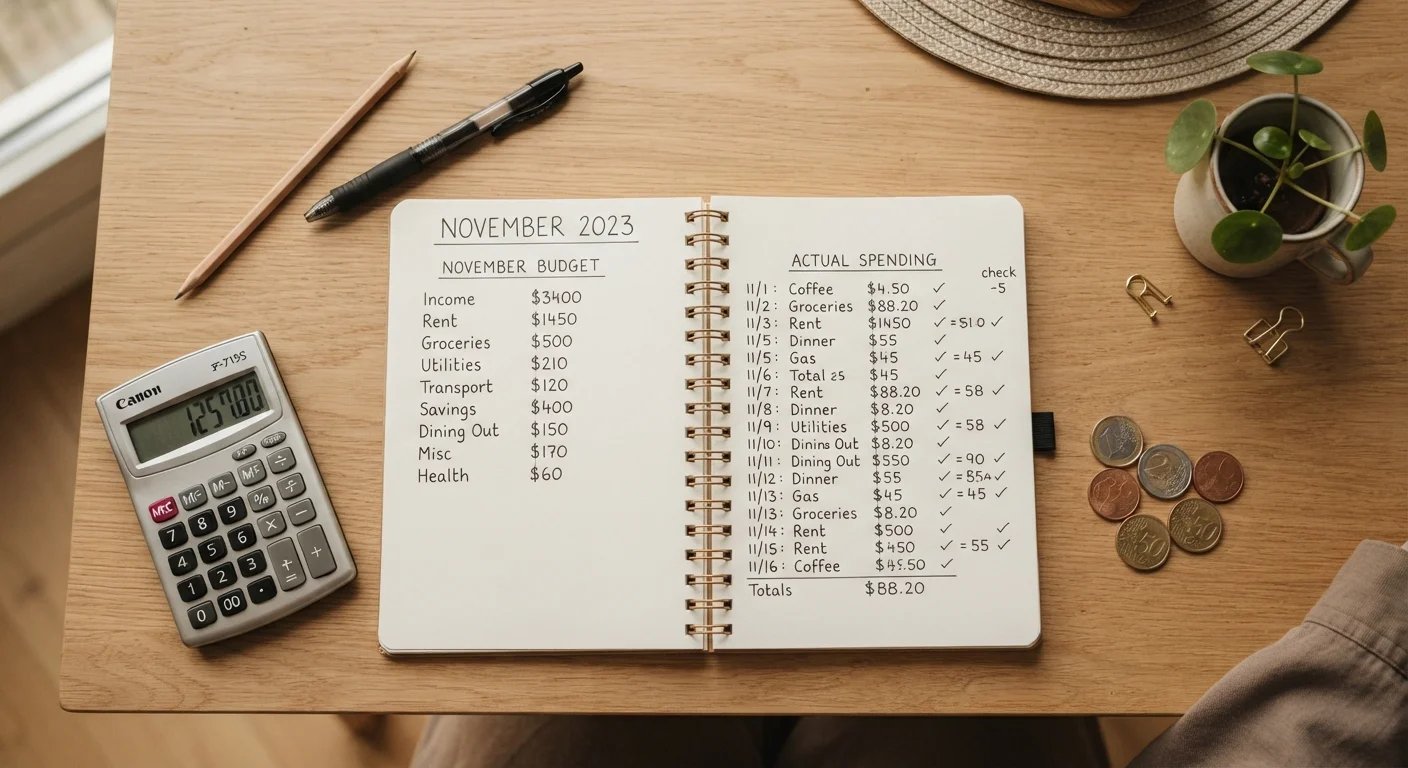
Ask someone what a budget is, and they'll often say something like: "It's keeping track of what I spend." That's understandable — but it's a subtle and consequential misunderstanding. Tracking what you've already spent is record-keeping. A budget is something different: it's a plan you make in advance for where your money will go.
This distinction matters enormously in practice. When a budget is treated as a running tally of past spending, it becomes a source of guilt rather than a guide for decision-making. People look back at an overspent category and feel bad — but because the money is already gone, there's nothing actionable to do. A forward-looking budget, by contrast, lets you make different choices before you spend.
Think of it this way: a budget is to your money what a recipe is to cooking. You gather your ingredients (income), decide what you're making (your financial goals and needs), and portion things out accordingly. You wouldn't call a recipe a restriction on eating — it's a guide that produces an intended result.
Budgeting vs. Spending Tracking: A Key Distinction
Spending trackers and budgeting apps often combine both functions, which can blur the line between the two activities. Recording what you spent yesterday is tracking; deciding what you'll spend tomorrow is budgeting. Both are useful, but only budgeting is a planning tool. Make sure you're doing both — not just one.
What a Budget Actually Does, Mechanically
At its core, a personal budget performs one function: it allocates income to categories before that income is spent. Those categories might include housing, groceries, transportation, savings, debt repayment, and discretionary spending like entertainment or dining.
The process has three basic steps:
- Tally your income. This is every dollar coming in — wages, freelance earnings, side income — ideally after taxes.
- List your spending categories. Group your expenses into meaningful buckets. Understanding which costs are fixed (rent, loan payments) versus variable (groceries, utilities) helps enormously here. See our guide to fixed vs. variable expenses for a deeper breakdown.
- Assign every dollar. Your income minus your allocated categories should equal zero — not because you spend everything, but because every dollar has a job, including dollars assigned to savings.
When actual spending is compared to the plan at month's end, you get clear information: which categories held, which ran over, and where adjustments are needed. That feedback loop is what makes budgeting a living practice rather than a one-time exercise.
~33%
Americans who maintain a detailed household budget
Gallup polling has consistently found that roughly one-third of U.S. adults say they prepare a detailed household budget each month.
20%+
Typical underestimate of discretionary spending
Behavioral finance research suggests people routinely underestimate variable spending categories such as dining and entertainment by 20% or more when relying on memory alone.
Why the Concept Trips So Many People Up
Several deeply held assumptions cause people to either misuse or avoid budgets entirely.
"Budgets are for people in financial trouble"
This is one of the most persistent myths. In reality, a budget is a neutral management tool — like a calendar. High earners use budgets to allocate savings and investments intentionally; lower earners use them to prioritize essentials and avoid shortfalls. Neither situation is about being in trouble. For more on common misconceptions, see budgeting myths that keep people from starting.
"A budget has to be perfect to work"
Many people abandon budgets after one bad month. But a budget that gets adjusted is doing exactly what it's supposed to do. Variance between plan and reality is information, not failure. The goal is not perfection — it's increasing awareness and intentionality over time.
"I already know roughly where my money goes"
Research consistently shows that people underestimate discretionary spending. A written budget externalizes assumptions that feel accurate but rarely are. The act of writing it down almost always surfaces surprises.
“A budget is telling your money where to go instead of wondering where it went.”
— Dave Ramsey, Personal finance author and radio host
Getting Started Without Overthinking It
The most effective budget is one that reflects your actual life — not an idealized version of it. That means including realistic amounts for groceries (not aspirational ones), budgeting for irregular expenses like car maintenance or annual subscriptions, and leaving room for genuine discretionary spending.
A budget that is too austere will be abandoned. A budget built on accurate data, even imperfect data, becomes more accurate over time as you learn your actual patterns.
If you've never made a budget before, the process doesn't need to be complex. Our plain-language guide for complete beginners walks through every step without jargon. For those ready to move into a full monthly structure, building a monthly budget offers a practical walkthrough from income tallying to category limits.
The single most important move is simply to start — even an imperfect budget creates more awareness than no budget at all.
This article is for general informational and educational purposes only and does not constitute personalized financial advice. For guidance specific to your financial situation, consult a qualified financial professional.
Frequently Asked Questions
Not at all. A budget simply makes your spending intentional. You can absolutely include dining out, entertainment, or hobbies as budget categories. The goal is to spend on what matters to you while not losing track of essentials and savings goals.
No. Budgeting is useful at any income level. In fact, lower incomes often benefit the most because there is less margin for error. A budget helps you stretch every dollar and catch leaks before they become crises.
Tracking is backward-looking — it tells you where money went. A budget is forward-looking — it decides where money will go before you spend it. Both are valuable, but a budget is the planning step that makes tracking meaningful.
Most people review their budget monthly, aligning it with pay cycles and recurring bills. You should also update it whenever your income, fixed expenses, or major financial goals change significantly.
That usually means the budget needs adjusting, not that budgeting doesn't work for you. Budgets are living documents. If a category is consistently over or under, revise the allocation to better reflect reality and build from there.
The content on this site is for informational purposes only and is not a substitute for professional advice. Always consult a qualified professional for guidance specific to your situation.