

Our Verdict
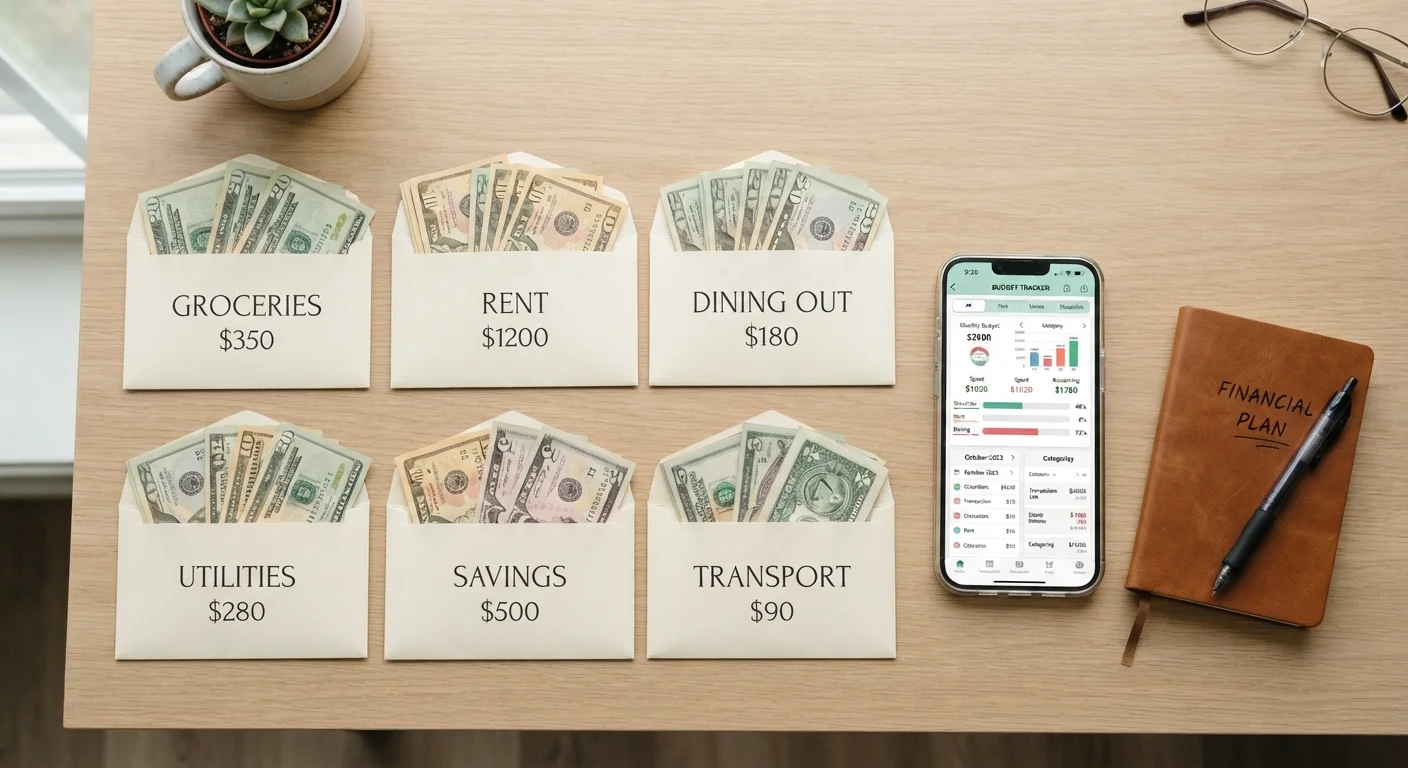
Envelope budgeting excels at creating tangible, hard-stop limits that eliminate overspending in high-risk categories, making it particularly valuable for those rebuilding financial habits. Digital tracking wins on convenience and comprehensiveness, especially for households with complex, cashless spending. For many people, the most effective approach blends both — using physical cash for volatile categories while relying on apps for full-picture oversight.
| Best for | Recommended |
|---|---|
| Those prone to overspending on discretionary categories | Envelope Budgeting |
| Primarily cashless households with multiple income streams | Digital Tracking |
| Those wanting spending accountability with modern convenience | Hybrid Approach |
| Anyone just starting to build a budgeting habit | Envelope Budgeting |
The Core Philosophy Behind Each Method
Budgeting isn't just arithmetic — it's behavioral. The way you interact with money shapes how well any system works. Envelope budgeting and digital tracking represent two fundamentally different theories about what keeps spending in check.
Envelope budgeting operates on physical constraint. You withdraw cash at the start of each budget period, divide it into labeled envelopes by category — groceries, dining out, entertainment — and spend only what's in each envelope. When an envelope is empty, spending in that category stops. The method's power lies in its finality: there's no overdraft buffer, no rounding up, no rationalizing a swipe.
Digital tracking works through visibility and awareness. Apps or spreadsheets automatically or manually log every transaction, categorize it, and report back where money went. The assumption is that when people clearly see their patterns, they'll make better choices. Understanding your budget categories and what each covers is equally important whichever method you choose.
| Envelope Budgeting | Digital Tracking | |
|---|---|---|
| Core mechanism | Physical cash limits by category | Automated or manual transaction logging |
| Works best with | Cash-based, discretionary spending | Card, app, and online transactions |
| Behavioral driver | Hard stop when envelope is empty | Awareness and reflection on data |
| Setup effort | Cash withdrawal and allocation | App setup and category mapping |
| Subscription tracking | Difficult to capture accurately | Automatic with linked accounts |
| Overspending prevention | Built-in physical limit | Requires self-discipline to act on alerts |
| Suitable for beginners | Yes — simple and tangible | Yes — if comfortable with apps |
| Flexibility | Low — requires cash transfers between envelopes | High — categories adjust in real time |
Where Each Approach Excels — and Struggles
The envelope method is especially effective for variable, discretionary spending — the categories most likely to creep over budget. Groceries, clothing, and dining are classic candidates. Because you physically hand over cash, spending feels real in a way that a card tap does not. Research in behavioral economics consistently finds that cash transactions feel more costly than equivalent card transactions, which can reduce impulsive purchases.
The limitation is obvious: most modern spending is digital. Rent, utilities, subscriptions, and online purchases don't fit neatly into a cash envelope. Managing a fully cash-based life in 2024 requires significant workaround effort, and spending leaks from subscriptions and recurring charges are nearly impossible to catch with physical envelopes alone.
Digital trackers handle this world naturally. They capture every transaction, including those quiet recurring costs that rarely appear in a first budget draft. The challenge is that awareness doesn't automatically produce behavior change. Seeing you overspent on dining doesn't stop the next restaurant visit the way an empty envelope does.
Try a Hybrid Approach for High-Risk Categories
You don't have to choose one method exclusively. Many people find success by identifying the two or three budget categories where they most frequently overspend — such as dining out or impulse shopping — and using physical cash envelopes for those alone. All other spending is tracked digitally. This captures the behavioral benefit of cash constraints exactly where it's needed, without the impracticality of a fully cash-based lifestyle.
Practical Fit: Matching the Method to Your Life
Choosing between these philosophies isn't about which is objectively better — it's about which aligns with how you actually behave. Consider these factors:
- Spending medium: If most of your purchases are card or app-based, a fully cash envelope system demands significant lifestyle friction.
- Discipline style: Some people respond better to hard limits; others genuinely change behavior when they see data clearly laid out.
- Budget complexity: Households with multiple income sources, irregular expenses, or shared finances often benefit from the comprehensive view digital tools provide.
- Comfort with technology: A budgeting app you find confusing won't get used consistently — and consistency is what produces results.
Many people find a hybrid model most realistic: using cash envelopes for the two or three categories where they historically overspend, while relying on a digital tool for tracking fixed expenses and total cash flow. This approach captures the behavioral friction of physical cash where it matters most, while maintaining the convenience and completeness of digital records. Pairing either method with a monthly budget review checklist helps ensure you're adjusting categories before problems compound.
It's also worth considering how either method fits within a broader budgeting philosophy. If you're weighing more structured frameworks, see how these tools compare to zero-based versus percentage-based budgeting to find the overall structure that suits your goals. And if you're evaluating whether tighter rules are right for you, a balanced look at the pros and cons of strict budgeting covers the real trade-offs involved.
This article is for general informational and educational purposes only and does not constitute personalized financial advice. Consult a qualified financial professional for guidance specific to your circumstances.
The content on this site is for informational purposes only and is not a substitute for professional advice. Always consult a qualified professional for guidance specific to your situation.