

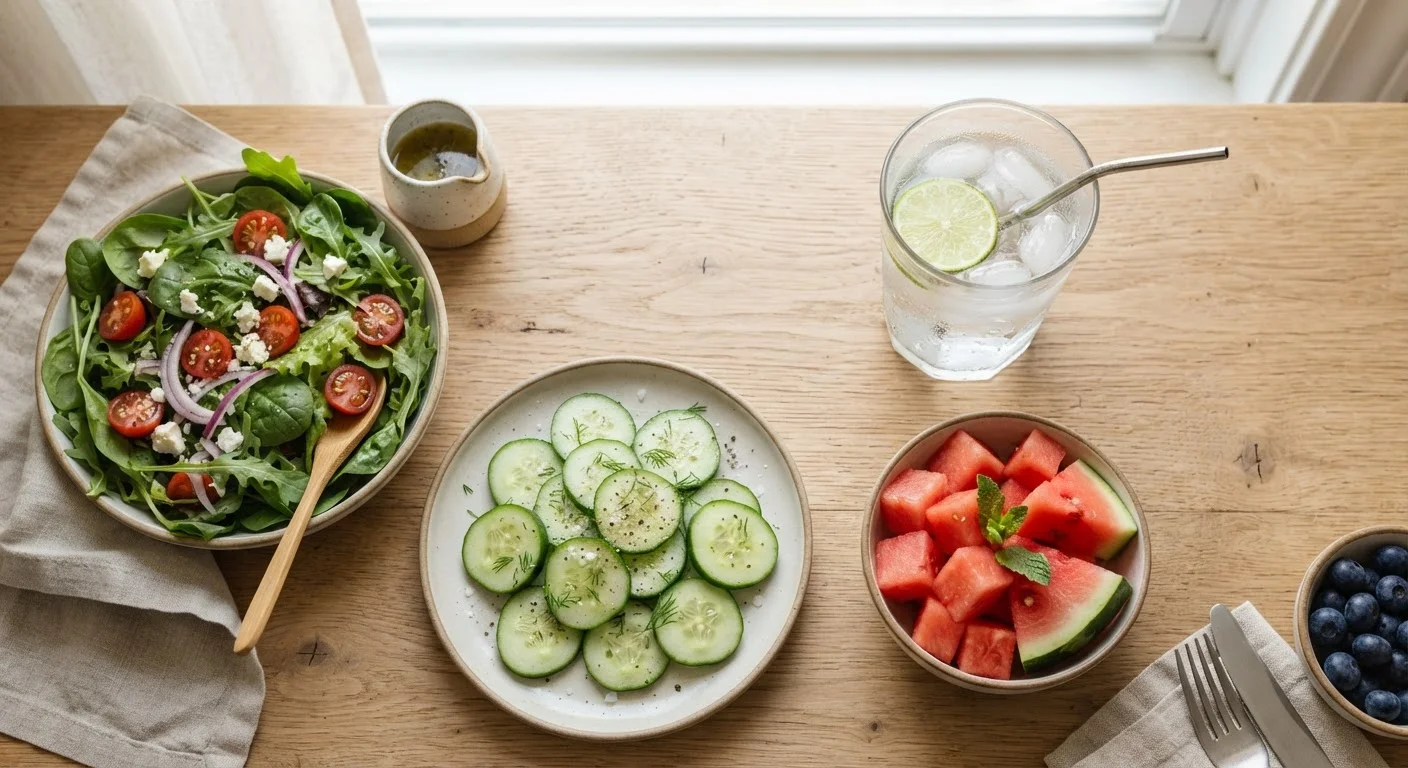
Food Is Part of Your Fluid Equation
Most hydration conversations start and end with drinking water — but the food on your plate is a significant, often overlooked part of the story. The human body draws water from both beverages and solid foods, and the balance between what you eat and drink shapes your overall hydration status in real and measurable ways.
Whole, minimally processed foods — especially fruits and vegetables — tend to deliver water alongside fiber, vitamins, and minerals. Heavily processed foods, by contrast, often draw on the body's water reserves to support digestion and waste elimination. Understanding this relationship can help you make everyday food choices that work with your body's needs rather than against them.
~20–30%
Daily water intake from food in typical diets
Nutritional research consistently finds that food contributes a meaningful share of total daily fluid intake, though the proportion varies by eating pattern.
>90%
Water content by weight in top hydrating vegetables
Foods like cucumber, lettuce, and celery are among the most water-dense edible plants, according to USDA nutritional data.
3,400 mg
Average daily sodium intake for U.S. adults
The CDC reports that average American sodium consumption exceeds the recommended limit of 2,300 mg per day, which can elevate fluid requirements.
Water-Rich Foods That Support Hydration
Some foods are so high in water content that eating them contributes meaningfully to your fluid intake without drinking a single extra glass. Cucumbers, iceberg lettuce, celery, tomatoes, and zucchini are all over 90% water by weight. Watermelon, strawberries, peaches, and oranges hover in a similar range. Soups, broths, and smoothies also count as fluid sources.
This is part of why eating patterns that emphasize whole plant foods tend to be associated with better hydration markers in research. Dietary traditions around the world that center vegetables, legumes, and fresh fruit naturally embed hydration into meals rather than treating it as a separate task.
Build Hydration Into Your Meals
Rather than tracking every ounce you drink, try building water-rich foods into each meal as a habit. Starting lunch with a salad, adding sliced cucumber or tomatoes to snacks, or choosing fruit for dessert naturally supplements your fluid intake. These small additions can take pressure off how much you need to drink separately.
Foods That Raise Your Fluid Requirements
Just as some foods contribute water, others draw on your body's reserves. High-sodium foods — including canned soups, deli meats, fast food, and heavily salted snacks — prompt the kidneys to excrete more sodium, a process that requires additional water. Over time, consistently high sodium intake can subtly elevate how much fluid you need to maintain balance.
High-protein diets present a similar dynamic. Protein metabolism produces nitrogen-containing waste products that the kidneys must process and eliminate through urine, which increases fluid demand. This doesn't mean protein is harmful — it's essential — but it does mean that people eating larger amounts of protein may want to be more intentional about staying hydrated. Alcohol and very high-sugar foods and beverages can also have dehydrating effects through various metabolic pathways.
Electrolytes Matter Too
Hydration isn't purely about water volume — electrolytes like sodium, potassium, and magnesium help your body retain and use fluids effectively. Whole foods like bananas, avocados, beans, and leafy greens contribute these minerals naturally. If your diet is low in these foods, fluid may pass through the body less efficiently even if total intake seems adequate.
Hydration Needs Are Not One-Size-Fits-All
General fluid intake guidelines from public health organizations are useful starting points, but individual needs vary considerably. Body size, physical activity, climate, health status, and — critically — diet all influence how much fluid any one person needs on a given day. Someone eating a produce-heavy diet in a cool climate has different needs than someone eating mostly processed foods while exercising in summer heat.
Nutritional needs also shift across life stages. Hydration requirements change as we age, and older adults in particular may experience a diminished sense of thirst even when fluid intake is insufficient — making food-based hydration sources especially valuable.
If you have specific health conditions, are pregnant, or are managing a chronic illness, it's important to speak with a qualified healthcare provider about your personal fluid needs rather than relying on general guidelines.
This article is for general informational and educational purposes only and does not constitute medical or dietary advice. Consult a qualified healthcare professional for guidance specific to your health needs.
Frequently Asked Questions
For most people, food alone is unlikely to meet total daily fluid needs — beverages still play the primary role. However, a diet rich in fruits and vegetables can contribute meaningfully, reducing how much you need to drink to stay balanced.
Cucumbers, lettuce, celery, tomatoes, watermelon, strawberries, and citrus fruits are among the highest in water content, often exceeding 90% water by weight. Soups and broths also count significantly toward fluid intake.
High sodium intake increases the body's demand for water to maintain electrolyte balance and support kidney filtration. Regularly eating very salty or processed foods can raise how much fluid you need to stay adequately hydrated.
Protein metabolism produces nitrogen waste products that the kidneys must flush out through urine, which generally increases fluid requirements. People eating higher amounts of protein may need to pay closer attention to drinking enough fluids throughout the day.
Pale yellow urine is generally a sign of adequate hydration, while dark urine can indicate you need more fluids. Persistent thirst, dry mouth, or fatigue after meals heavy in salt or processed food may be worth noting and discussing with a healthcare provider.
Moderate consumption of caffeinated beverages like coffee and tea does contribute to fluid intake for most people, according to established nutritional guidance. The mild diuretic effect of caffeine does not fully offset its fluid contribution at typical intake levels.
The content on this site is for informational purposes only and is not a substitute for professional advice. Always consult a qualified professional for guidance specific to your situation.