

Our Verdict
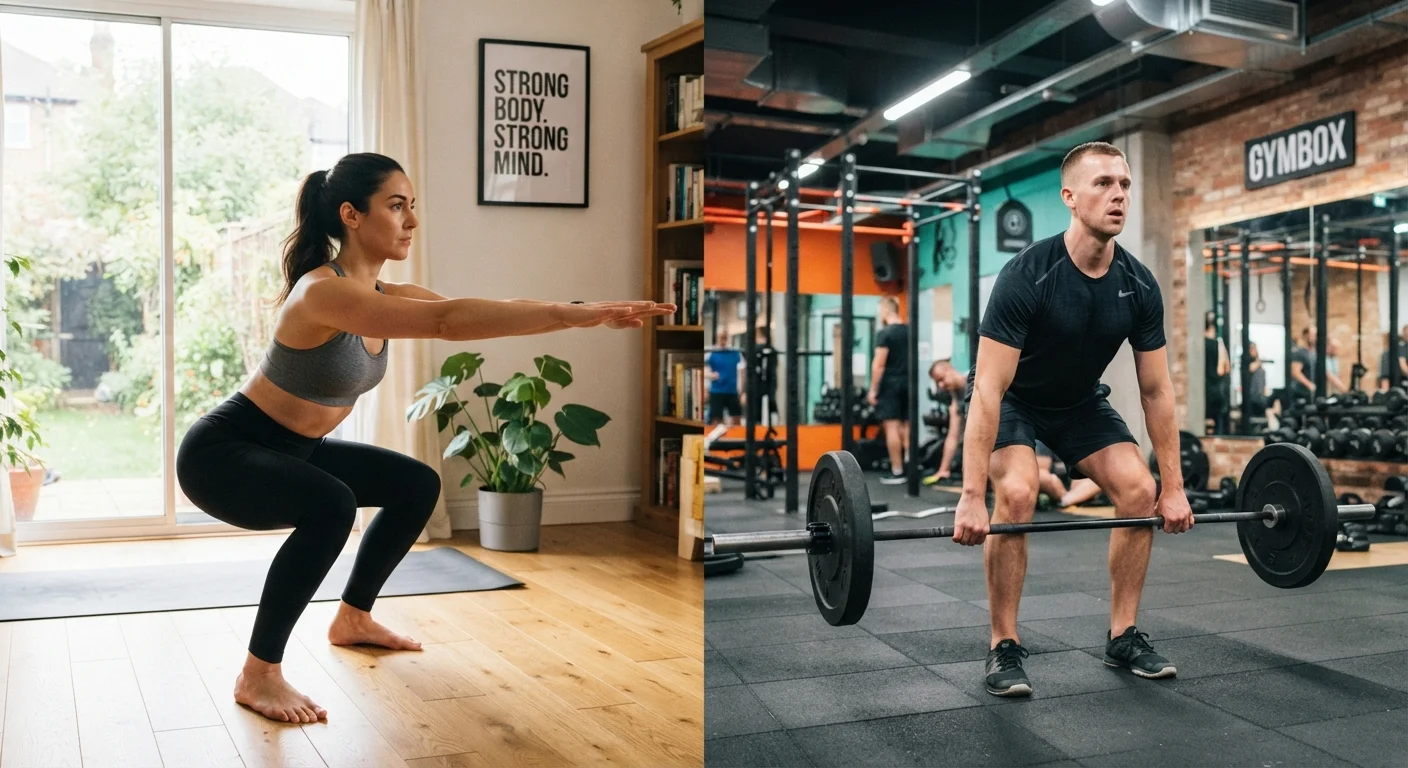
Home training and gym training are both legitimate, effective paths to better fitness — the real differentiator is personal sustainability. Home workouts offer unmatched convenience and low ongoing cost, while gyms provide equipment, structure, and community that many people need to stay engaged. Neither option has a monopoly on results.
| Best for | Recommended |
|---|---|
| Those working within tight budgets or unpredictable schedules | Home Workouts |
| Those who thrive with variety, social energy, or structured guidance | Gym Training |
| Those pursuing intermediate-to-advanced strength or sport-specific goals | Gym Training |
| Those who find gym environments intimidating or prefer training privately | Home Workouts |
The Cost Reality: What You Actually Pay
Cost is often the first factor people weigh, and the numbers are more nuanced than a simple gym fee comparison. A mid-range gym membership in the US typically runs between $30 and $60 per month, though premium facilities can exceed $100. Over five years, that adds up to $1,800–$6,000 — before factoring in gas, parking, or personal training sessions.
Home training carries a higher initial outlay if you invest in equipment, but many effective programs require little more than a yoga mat and your own bodyweight. A set of resistance bands, a pair of adjustable dumbbells, and a pull-up bar can cover a wide range of fitness goals for a one-time cost that pays for itself within months. The key caveat: equipment you don't use is money wasted either way.
| Home Workouts | Gym Training | |
|---|---|---|
| Ongoing Cost | Low (after equipment purchase) | Monthly fee required |
| Equipment Variety | Limited by space and budget | Extensive, regularly maintained |
| Convenience | No commute, flexible hours | Fixed location and hours |
| Social Environment | Private, solitary | Community, group classes available |
| Expert Access | Self-directed or online only | Trainers and staff on-site |
| Strength Progression | Limited at advanced levels | Strong support for progressive overload |
| Barrier to Entry | Low — start immediately | Sign-up, travel, gym comfort required |
Variety, Equipment, and What You Can Actually Train
Gyms hold a genuine advantage when it comes to equipment breadth. Barbells, cable machines, squat racks, and specialty cardio equipment open up training modalities that are difficult or expensive to replicate at home. For those pursuing serious strength gains, muscle hypertrophy, or sport-specific conditioning, this variety matters. As explored in our comparison of cardio and strength training, progressive overload — gradually increasing resistance — is central to many fitness goals, and that's easier to achieve with access to a full weight rack.
Home environments, by contrast, can feel limiting at first but are frequently underestimated. Calisthenics, resistance band programming, and HIIT routines can deliver substantial cardiovascular and muscular fitness without a single machine. The limitation tends to appear at the upper end of strength training, where load progression eventually requires heavier equipment than most home setups can provide.
Start Simple Before Buying Equipment
Before investing in home gym equipment, spend four to six weeks training with bodyweight-only routines. This helps you identify what movements you enjoy and what gaps you actually need to fill — preventing costly purchases that gather dust. Many people discover their needs are simpler than expected.
Motivation, Habit Formation, and the Consistency Factor
Research consistently shows that the single biggest predictor of fitness outcomes is adherence — showing up over time. This is where the comparison gets personal. Many people find that the social atmosphere of a gym, the presence of others working hard, and the psychological act of physically going somewhere create a powerful motivation loop. For them, a gym isn't just a place to exercise; it's a behavioral cue that triggers the workout mindset.
Others find gyms socially overwhelming, time-inefficient, or anxiety-inducing — particularly those new to exercise. If gym intimidation is a barrier, it's worth knowing that this is a documented and widespread experience, not a personal failing. Common fitness myths examined against exercise science confirms that the idea of needing a gym to get fit simply isn't supported by evidence. For those who prefer to accumulate movement through daily life rather than structured sessions, everyday fitness strategies offer a practical alternative worth exploring.
~50%
People who quit new exercise routines within 6 months
Adherence research consistently finds that roughly half of individuals who begin a new exercise program discontinue within the first six months, highlighting consistency as the central challenge.
20–40 min
Typical round-trip gym commute time
For many urban and suburban Americans, travel to and from a gym adds 20 to 40 minutes to each workout session, a friction point that can erode long-term adherence.
Space, Scheduling, and the Lifestyle Fit
Home training removes the commute — often 20 to 40 minutes round-trip — and eliminates scheduling around gym opening hours, crowded equipment, or waiting for machines. For parents, shift workers, frequent travelers, or anyone with unpredictable days, this flexibility is a meaningful practical advantage that directly affects consistency.
The limitation is space. Apartment dwellers may not have room for a bench or barbell, and shared living situations can make early-morning or late-night workouts difficult. Noise, neighbor considerations, and limited floor area are real constraints. A gym, in this context, provides a dedicated space purpose-built for exercise — something that matters more than it might initially seem.
A hybrid model — maintaining a gym membership for strength and equipment-dependent work while keeping a home routine for mobility, recovery days, or busy weeks — is a practical middle ground many people find sustainable over the long term.
This article is for general informational purposes only and does not constitute medical or personal fitness advice. Consult a qualified healthcare professional or certified fitness professional before beginning any new exercise program, particularly if you have existing health conditions.
The content on this site is for informational purposes only and is not a substitute for professional advice. Always consult a qualified professional for guidance specific to your situation.