

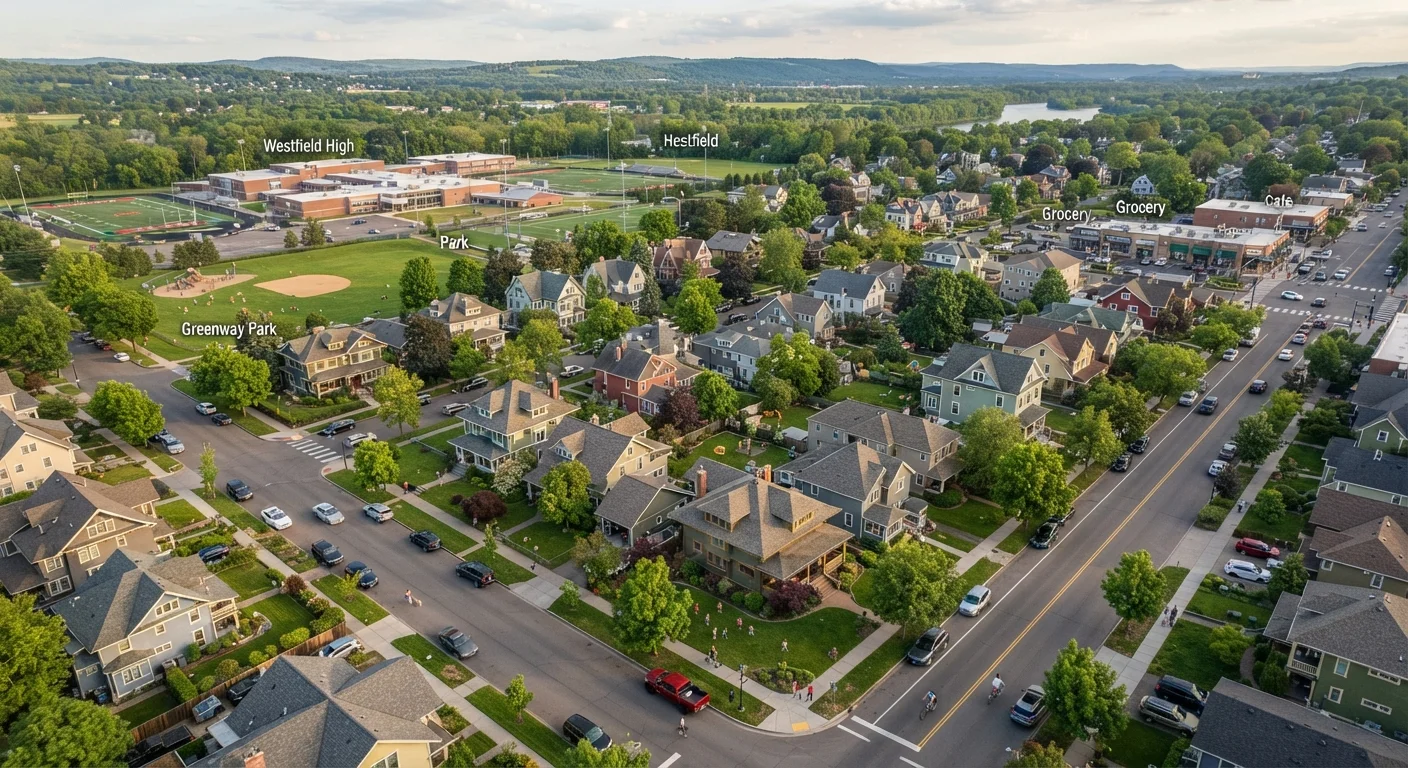
How Insurers Define Your Geographic Risk
When you apply for auto insurance, your insurer doesn't just look at your driving history or the car you drive — it also examines where that car lives. Every address is mapped to a rating territory, typically aligned with ZIP codes or groups of ZIP codes, each carrying its own statistical risk profile built from years of claims data.
Insurers evaluate several location-specific factors within that territory:
- Accident frequency: How often do collisions occur on local roads compared to state averages?
- Vehicle theft rates: Areas with higher auto theft generate more comprehensive claims, raising costs for all local policyholders.
- Weather exposure: Regions prone to hail, flooding, or ice storms produce more weather-related claims.
- Medical and legal costs: Local healthcare costs and litigation patterns affect how expensive claims are to settle once filed.
- Traffic density: More vehicles sharing the same roads statistically increases the chance of a collision.
These variables combine into a territory-level loss cost factor that is applied to every policy issued in that area, regardless of an individual driver's personal record.
Up to 2x
Premium difference between high- and low-risk ZIP codes
Industry analyses consistently show that drivers in dense urban ZIP codes can pay roughly twice the premium of comparable rural drivers in the same state.
~1 million
Vehicles stolen annually in the US
According to the National Insurance Crime Bureau, vehicle theft contributes directly to comprehensive insurance costs, with theft-heavy ZIP codes bearing a proportionally higher burden.
50+
Separate state regulatory frameworks governing rating
Each US state maintains its own insurance regulatory body that reviews and approves territorial rating factors, meaning rules and allowable variables differ by jurisdiction.
Urban vs. Rural: Why the Gap Can Be Significant
The contrast between urban and rural insurance pricing is one of the clearest illustrations of territorial rating at work. Dense city environments tend to have higher premiums for several compounding reasons: congested roads increase fender-bender frequency, high population density correlates with more vehicle theft, and urban repair shops may carry higher labor costs.
Rural drivers, by contrast, often benefit from lower premiums because accident frequency is lower, theft rates are typically reduced, and claims are generally less costly to resolve. However, rural areas are not uniformly lower-risk — regions exposed to severe weather or with limited emergency medical access can see elevated costs on certain coverages.
“Insurance pricing is fundamentally about pooling and distributing risk. Where you live tells an insurer a great deal about the risk environment your vehicle operates in every day.”
— J. Robert Hunter, Former Texas Insurance Commissioner and Director of Insurance, Consumer Federation of America
It's also worth noting that the relationship between location and cost isn't always intuitive. A ZIP code just across a city boundary may carry a significantly different rate than its neighbor, reflecting very localized differences in claims history.
What Drivers Can — and Cannot — Control
Your ZIP code is largely fixed as long as you live where you live, but understanding how territorial rating works can help you make more informed decisions about vehicle ownership costs. Just as registration costs vary by location and vehicle type, insurance premiums are shaped by geographic realities that go beyond individual driver behavior.
A few practical considerations for drivers:
- When relocating: If you're considering a move, understanding the insurance cost profile of potential ZIP codes is a legitimate part of assessing your total cost of living.
- Garaging address accuracy: Always report the address where your vehicle is actually kept overnight. Listing a different address to obtain a lower rate is considered misrepresentation and can result in a denied claim or policy cancellation.
- Coverage adjustments: Drivers in high-theft areas may want to evaluate whether their comprehensive coverage limits are adequate for local risk levels.
Check Your Garaging Address at Every Renewal
If you've moved — even across town — update your garaging address with your insurer promptly. Failing to do so could mean your policy is based on inaccurate information, which may affect your coverage in the event of a claim.
Territorial rating is state-regulated, meaning insurance commissioners review the factors insurers apply in each jurisdiction. This oversight is intended to ensure that geographic pricing reflects actual actuarial data rather than arbitrary distinctions.
This article is for general informational purposes only and does not constitute personalized insurance or financial advice. For guidance specific to your policy or situation, consult a licensed insurance professional or your state's department of insurance.
Frequently Asked Questions
Insurers analyze historical claims data by geographic area to assess the likelihood that drivers in a given location will file a claim. Areas with higher accident rates, vehicle theft, or severe weather claims are considered higher risk, which is reflected in higher premiums for residents of those ZIP codes.
It's possible. If you move to an area with lower accident frequency, less vehicle theft, and fewer costly claims, your rate may decrease. However, your premium is determined by multiple factors, so a move alone does not guarantee a lower rate.
Yes. Territorial rating is a standard, state-regulated practice in the US. State insurance commissioners review and approve the rating factors insurers use, including geographic territories, to ensure they are actuarially justified.
Insurers primarily use your garaging address — where the vehicle is regularly parked overnight — rather than a mailing address. Using an inaccurate garaging address to obtain a lower rate can be considered insurance fraud.
Most states permit territorial rating, though a few have restrictions on how heavily any single factor, including location, can influence premiums. The specifics vary by state, so checking with your state's department of insurance is the best way to understand local rules.
The content on this site is for informational purposes only and is not a substitute for professional advice. Always consult a qualified professional for guidance specific to your situation.