

What Depreciation Actually Means for Vehicle Owners
When you purchase a vehicle — new or used — you're not buying a fixed-value asset. You're buying something that will be worth less tomorrow than it is today. That's depreciation in its simplest form: the reduction in a vehicle's market value over time.
Unlike a mortgage payment or insurance premium, depreciation doesn't show up on a bill. But it represents real money. A vehicle purchased for $35,000 that's worth $22,000 three years later has lost $13,000 in value — roughly $360 per month, before any other ownership costs are tallied. For a full picture of what vehicle ownership actually costs, see The True Cost of Owning a Car in the US.
Depreciation matters beyond resale. It affects how much you'll owe versus how much your car is worth if you finance it — a situation called being "underwater" on a loan — and it determines your insurer's payout if the vehicle is totaled.
~20%
Average new vehicle value lost in year one
Industry estimates widely place first-year depreciation for new vehicles between 15% and 25%, depending on the make and model.
~50%
Value remaining after five years of ownership
Many new vehicles retain only around 40%–60% of their original value after five years, according to automotive valuation industry data.
$0.08–$0.12
Estimated depreciation cost per mile driven
The IRS standard mileage rate and fleet cost analyses suggest depreciation alone can account for 8 to 12 cents per mile on an average passenger vehicle.
The Depreciation Curve: When Value Drops Fastest
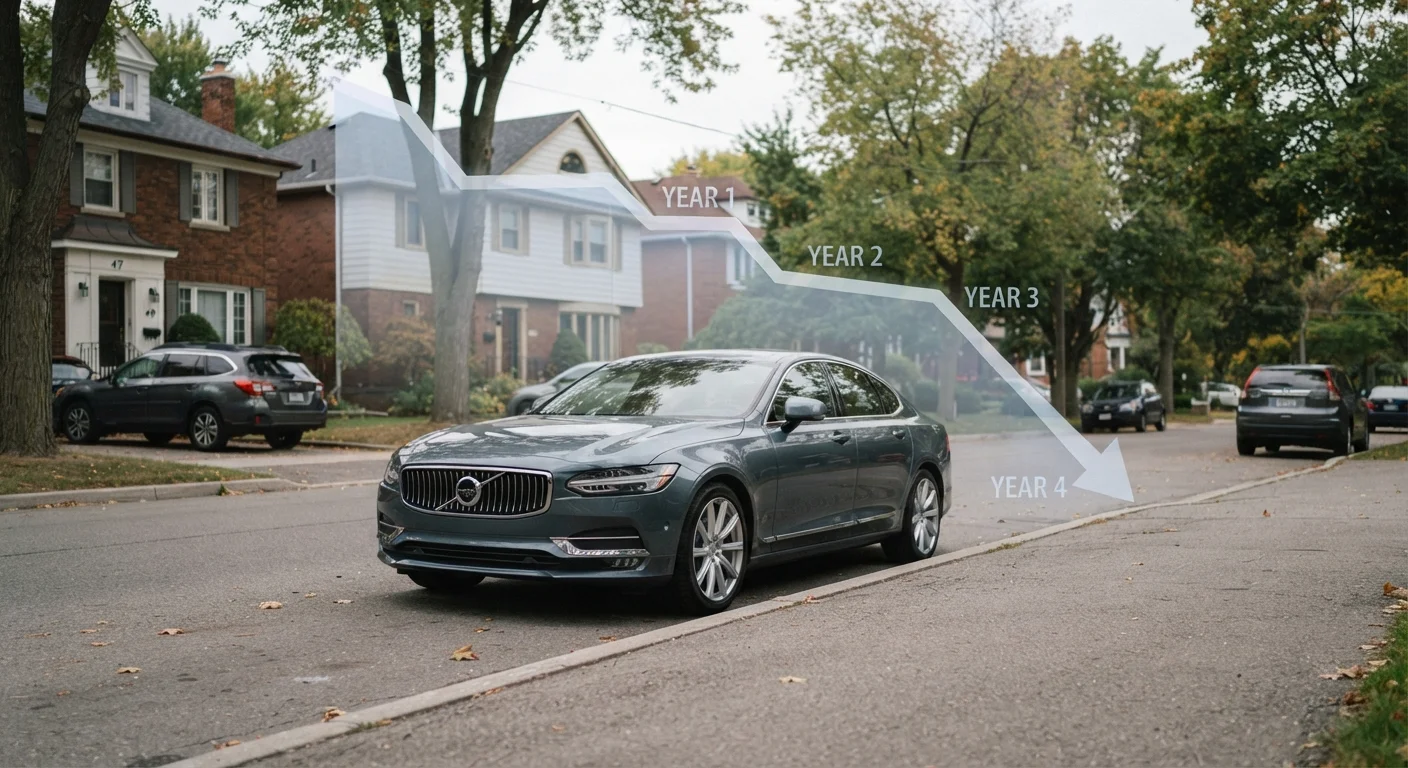
Depreciation is not a straight-line decline. It follows a curve — steep at first, then gradually flattening out.
The sharpest drop typically occurs in the first year. A new vehicle can lose 15%–25% of its value the moment it's driven off the lot and through its first 12 months of use. This happens in part because the car transitions from "new" to "used" in the eyes of the market, losing the premium buyers pay for factory-fresh inventory.
Years two and three continue the decline, though at a somewhat slower rate. By year five, many vehicles have lost roughly half their original value. After that, depreciation slows considerably — a 10-year-old car doesn't drop in value at the same pace it did at age two.
This curve has a practical implication: buying a vehicle that's two or three years old lets you avoid the steepest part of the drop, often at significantly lower cost than buying new. See Financing a Car vs. Paying Cash to understand how this intersects with your purchasing approach.
Key Factors That Drive Depreciation
Not all vehicles depreciate at the same rate. Several factors push value up or down:
- Mileage: Higher mileage signals more wear and reduces a vehicle's remaining useful life, which lowers its appeal to buyers.
- Condition: A vehicle with dents, worn upholstery, or deferred maintenance will lose value faster than one that's been carefully maintained.
- Market demand: Models with strong reputations for reliability and utility — particularly trucks and select SUVs — tend to hold value better due to sustained buyer demand.
- Fuel economy: When gas prices rise, fuel-efficient vehicles often retain value better than less efficient alternatives.
- Trim level and features: Well-equipped vehicles in popular configurations typically depreciate more slowly than base trims with limited options.
- Color and aesthetics: Neutral, widely preferred colors (white, silver, black, gray) tend to appeal to a broader resale market than niche colors.
Service Records Protect Resale Value
Keeping a complete, organized record of all maintenance — oil changes, tire rotations, brake work, and inspections — gives future buyers confidence in the vehicle's history. This documentation can support a meaningfully higher asking price when you sell or trade in. Even informal records from a reliable shop are better than none.
Service records also matter. A vehicle with a documented maintenance history reassures buyers and supports a stronger asking price. Consistent upkeep is one of the most reliable ways to protect resale value — see Making Your Vehicle Last Longer for practices that hold up under scrutiny.
How Depreciation Affects Your Ownership Decisions
Understanding depreciation gives you better footing when making vehicle decisions at every stage of ownership.
When buying: A vehicle's depreciation rate should factor into your total cost calculation, not just the sticker price. Two similarly priced vehicles can carry very different five-year ownership costs if one depreciates significantly faster than the other.
When financing: If you finance a vehicle with a small down payment, you risk being "upside down" on the loan — owing more than the car is worth — during the early years when depreciation is steepest. Gap insurance exists to address this risk.
When selling or trading in: Timing matters. Trading in a vehicle during its second or third year may mean accepting a sharper loss than waiting until the depreciation curve has flattened. However, holding a vehicle longer reduces per-year depreciation cost.
Depreciation is one of several ownership costs worth understanding thoroughly before signing any paperwork. Familiarize yourself with the full range of terms involved by reviewing Key Terms Every Car Owner Should Understand Before Signing Anything.
This article provides general financial information for educational purposes and does not constitute personalized financial or legal advice. Consult a qualified financial professional for guidance specific to your situation.
Frequently Asked Questions
Most new vehicles lose roughly 15% to 25% of their value within the first year. By the end of year five, a car may be worth only about 40% of its original purchase price. The exact figure depends on the make, model, and market conditions.
Yes, mileage is one of the most significant factors affecting depreciation. Higher mileage signals more wear and reduces the vehicle's remaining useful life, which lowers its market value. Industry averages typically assume around 12,000–15,000 miles per year.
Yes. Vehicles with strong reputations for reliability and high consumer demand — such as certain trucks, SUVs, and hybrid models — tend to hold their value better than average. Market supply and fuel economy also influence how quickly a specific model depreciates.
Yes. In the event of a total loss, most standard auto insurance policies pay the vehicle's actual cash value, which accounts for depreciation. This means an older or high-mileage vehicle may receive a payout significantly lower than what the owner paid for it.
You can't stop depreciation, but you can reduce its pace. Keeping mileage reasonable, maintaining service records, avoiding accidents, and preserving the vehicle's interior and exterior condition all support stronger resale value.
Buying a used vehicle allows you to avoid the steepest phase of depreciation, which occurs in the first one to three years. This can represent meaningful savings compared to buying new, though other factors like warranty coverage and financing rates also matter.
The content on this site is for informational purposes only and is not a substitute for professional advice. Always consult a qualified professional for guidance specific to your situation.